
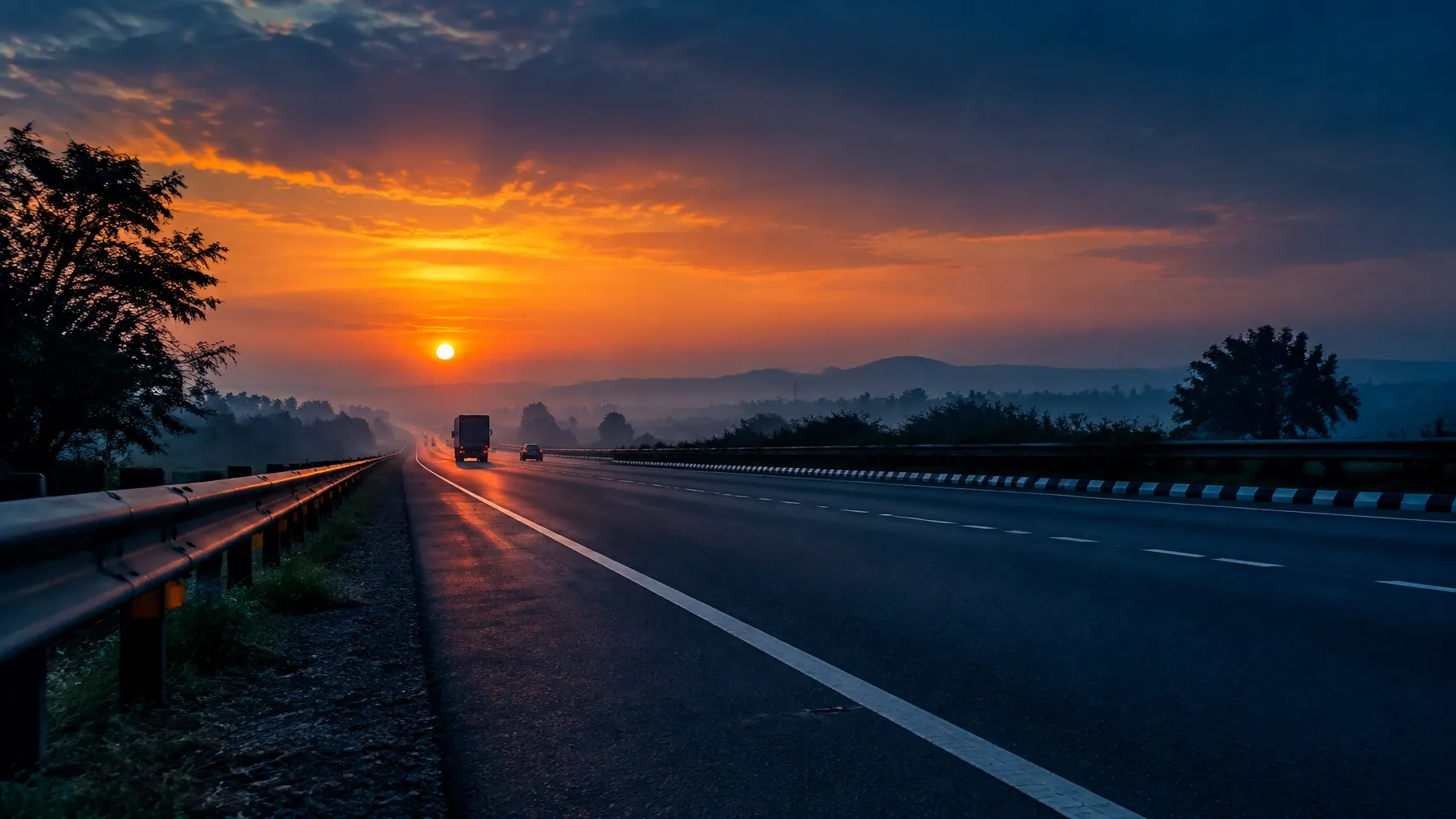
The fastest road through a place is rarely the most memorable one. India’s new expressways make long distances feel close, but they also make it easy to miss the river steps, old shrines and small-town kitchens that give a route its texture.
Use this as a companion for the drive, not a race against the clock. Leave a little space around each stop. The best part of the journey is often a few kilometres away from the sign you were looking for.
01 — Ganga Expressway
The Ganga Expressway is a clean, quick line across the north. Let it be the spine of the day, then step off it where the river and the older road still have something to say.
Stop 01: Garhmukteshwar river ghat
Arrive near sunset if you can. The ghats are at their most generous when the heat has dropped: boats move slowly, lamps gather on the water, and a short walk becomes a useful pause before the next stretch.
Stop 02: Hastinapur’s quieter edges
Hastinapur rewards an unhurried morning. Set aside time for the temples and wetlands rather than treating the town as a quick photo stop. It is a good place to reset the pace of a family drive.
02 — Chitrakoot Link Expressway
The road toward Chitrakoot changes the mood of the trip. The landscape folds inward, the light gets softer, and the journey begins to feel less like a transfer between cities and more like an arrival.
Stop 03: Ramghat at first light
Walk the riverfront before the day gets busy. The stone steps, temple bells and reflected sky do more for the memory of a route than another hour behind the wheel.
Stop 04: Hanuman Dhara
Plan for the climb and carry water. From the hilltop, the view turns the surrounding road network into something almost abstract — a reminder that every fast route is also a way through a living landscape.
03 — Shaktipeeth Expressway
For a spiritual circuit, the Shaktipeeth route works best as a sequence of small departures. Choose one temple town for the morning, one for the afternoon, and leave the evening open for wherever the road feels calm.
Stop 05: Vindhyachal
Keep the visit simple and respectful. A short temple visit followed by tea in the old market is enough to make the stop feel rooted rather than scheduled.
Stop 06: A hilltop shrine at dusk
End the longer day somewhere high. When the last light catches the shrine and the highway disappears into the valley, the distance you travelled starts to feel like part of the ritual.
What the route costs
Budget for tolls, fuel, one comfortable night and the flexibility to stop for a meal that was not on the original plan. The most useful buffer is not a larger car or a fuller itinerary — it is two unclaimed hours.
For a family of four, a practical day usually means an early start, one major stop, one slower meal and a firm arrival before dark. Travelling as a couple or alone gives you more room to trade distance for detours.
Leave room for the road
Roads are useful because they get us somewhere. Routes are memorable because they let us notice where we are. Keep the map open, take the next sensible turn, and let the journey have one detail you could not have planned from home.